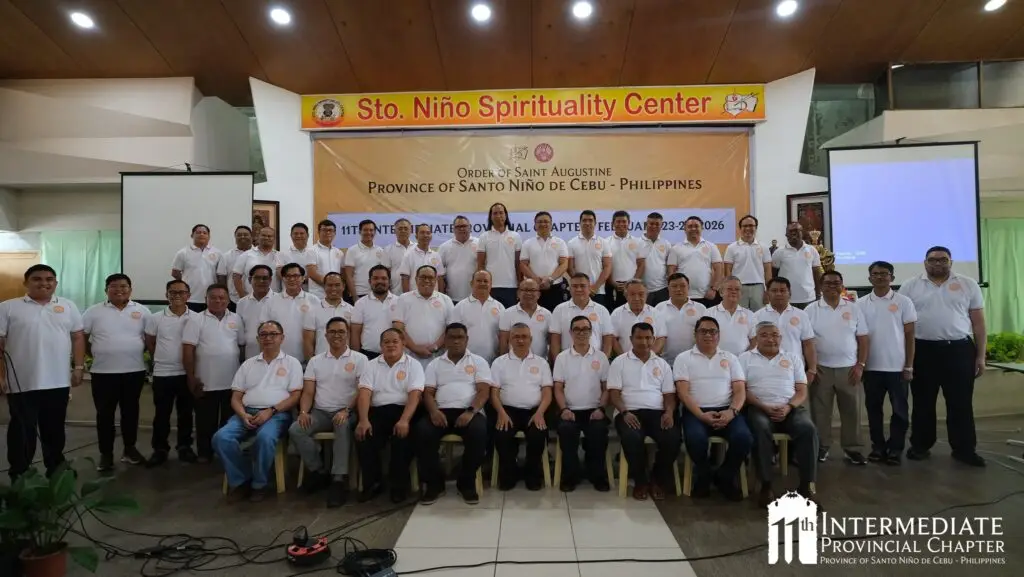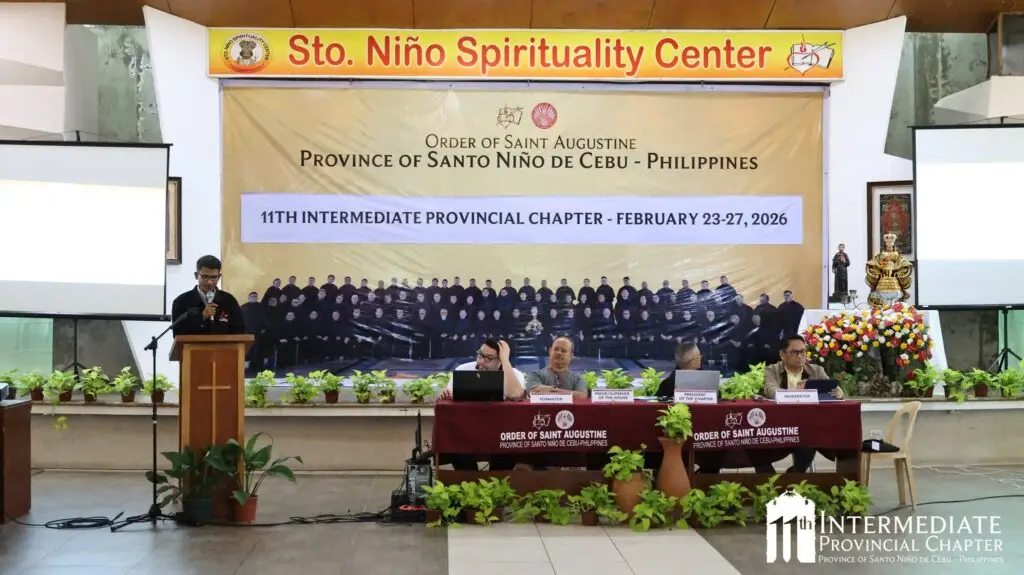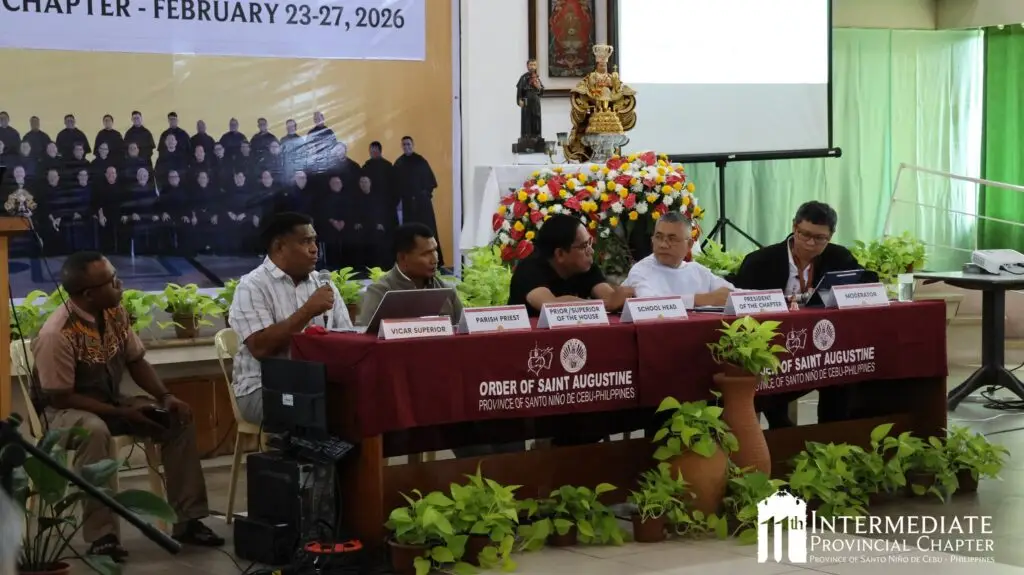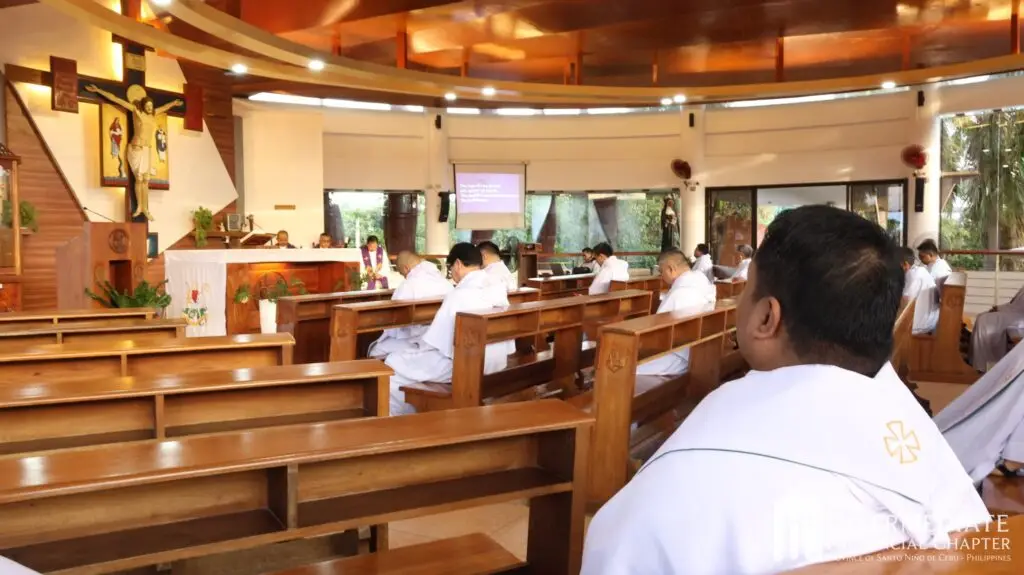
In his homily during the Opening Mass of the 11th Intermediate Provincial Chapter, Very Rev. Fr. Andrew P. Batayola, OSA grounded the assembly’s reflection on the Gospel of Matthew 25:31–46, the great eschatological discourse of Jesus on the Last Judgment.
The Gospel presents a vivid image of the end times: the Son of Man separating the sheep from the goats and pronouncing judgment. Yet Fr. Batayola emphasized a striking truth—the judgment described by Jesus is, in a sense, already determined before the court even begins. Humanity, through its daily choices, has already shaped the outcome. Judgment is not an arbitrary decree but the consequence of how we have loved.
He invited the friars to reflect on their own experiences of judgment in their communities and residences, and even the use of the pastoral method of “See–Judge–Act.” Often, judgment carries a negative tone, suggesting condemnation. But evaluation just like what will happen during the Chapter, when properly understood, exists to foster growth and improvement.
Thus, the Intermediate Provincial Chapter is evaluative in nature—not an administrative review, but a moment of truth. It is a time to ask: Where have we been faithful? Where are we called to grow? It is communal discernment carried out under the loving gaze of the Lord. Evaluation here is not about passing sentence on one another, but discerning together how the Province can better serve Christ and His people.
The basis of judgment in the Gospel is clear: the Corporal Works of Mercy. “I was hungry and you gave me food… thirsty and you gave me drink.” Mercy and love are the criteria for inheriting the Kingdom prepared from the foundation of the world. Fr. Batayola reminded the brothers that, as sons of Augustine of Hippo, they are called to embody this same compassionate spirit. St. Augustine’s love for the poor and his pastoral charity stand as enduring examples.
He also spoke of the “fasting of the heart”—a fasting that goes beyond external practices. What we deprive ourselves of in fasting should satisfy the hungry Christ in others. True fasting expands the heart, deepens our concern for the needy, and creates more space to listen—especially to the brothers within the community. Mercy begins at home, in attentive fraternity.
Ultimately, the IPC is an act of love for the Province. It is an opportunity to share lives, stories, struggles, and mercies as brothers. In this shared discernment, the call is clear: to grow in mercy and love so that, at the final judgment, we may hear the blessed words, “Come… inherit the Kingdom prepared for you.”
The homily concluded with the invitation: Let this Chapter not merely evaluate structures and ministries, but renew hearts. For in the end, it is mercy lived and love given that determine our destiny in Christ.