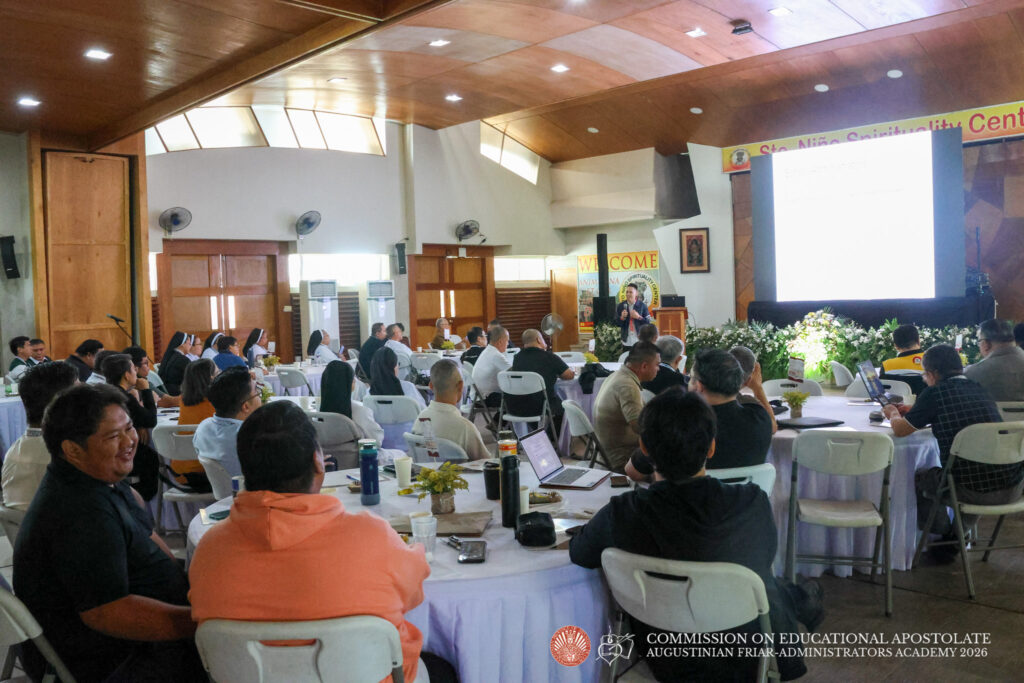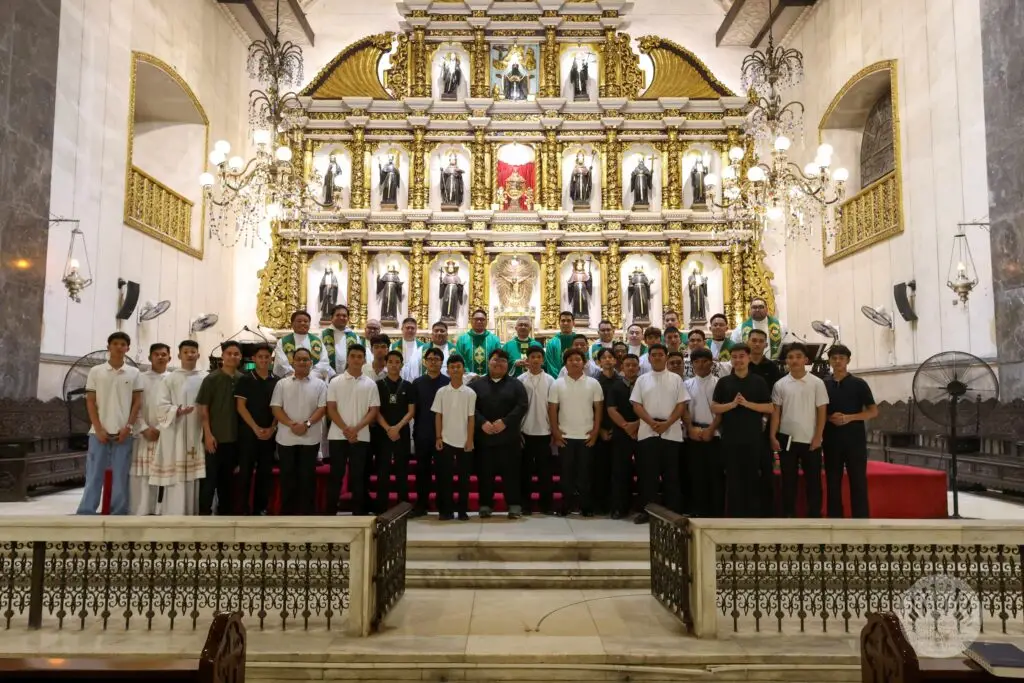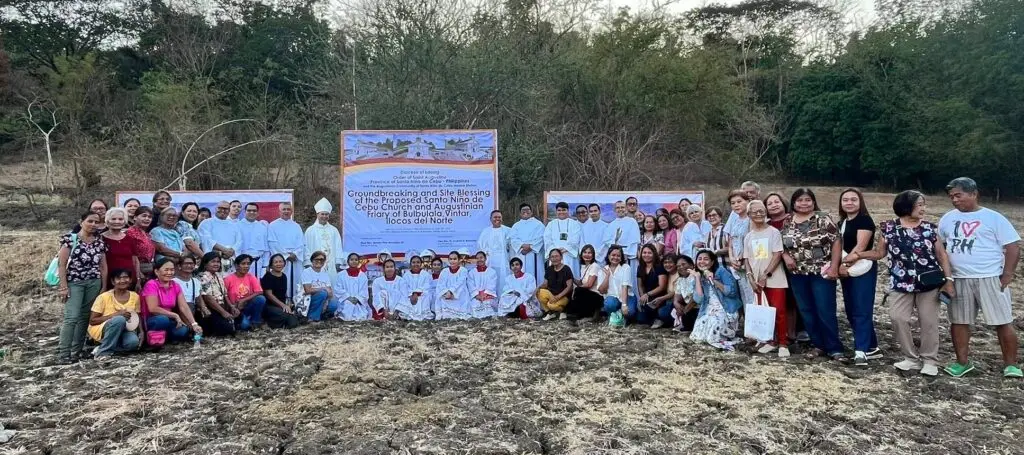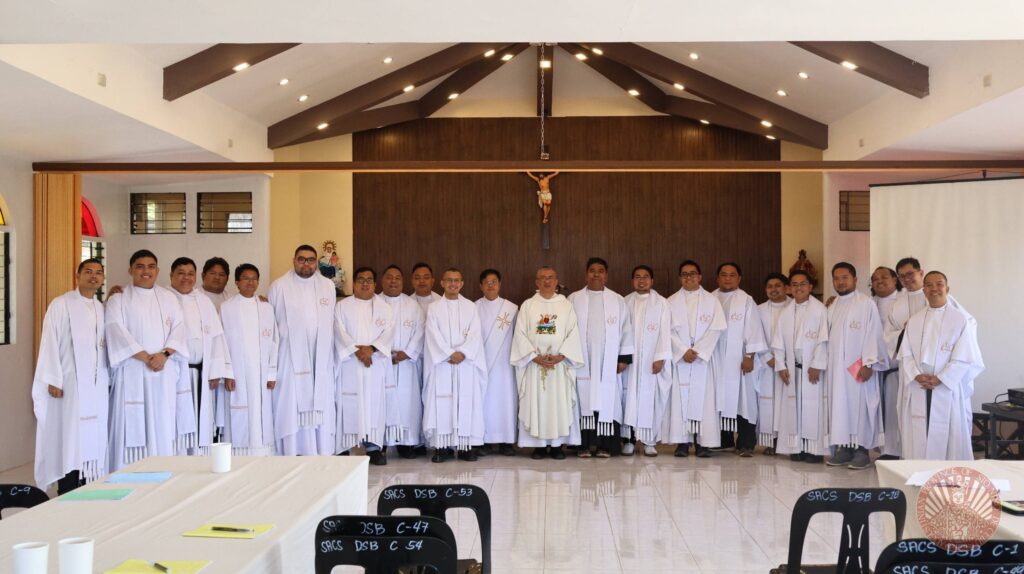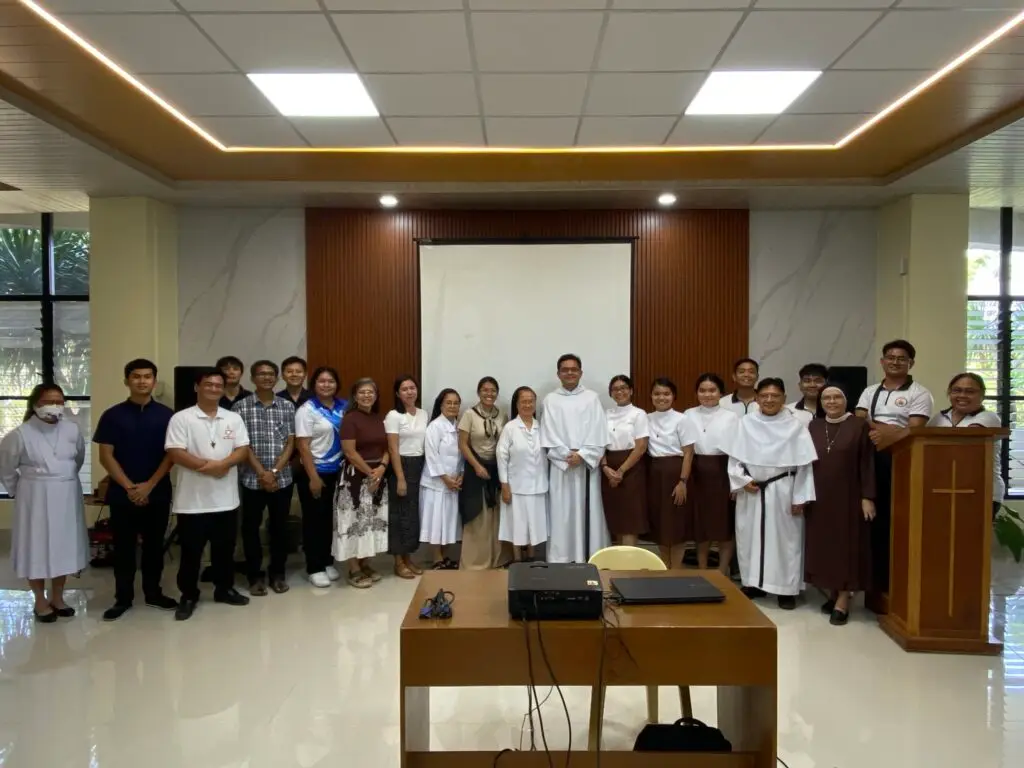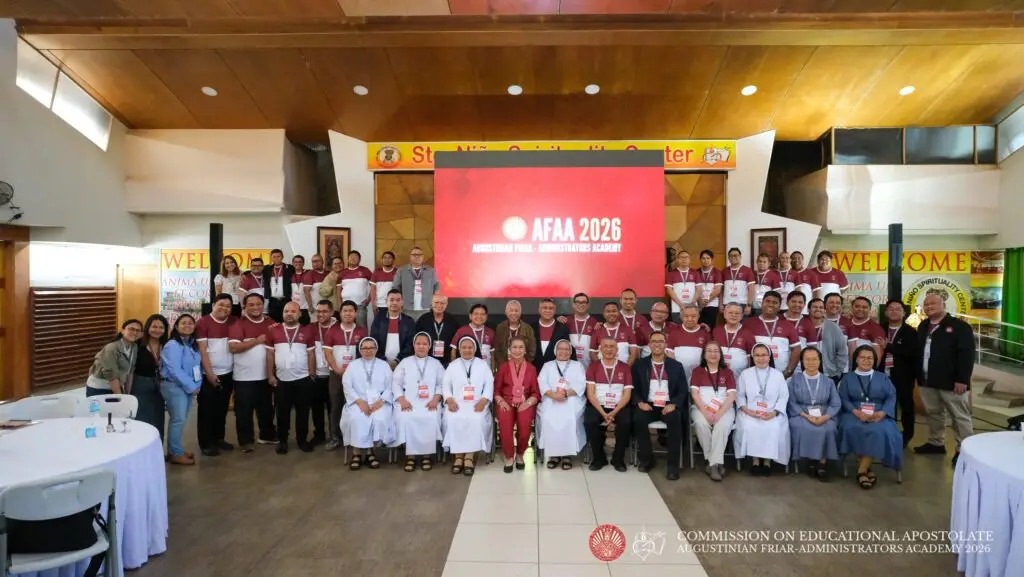
The three-day Augustinian Friar-Administrators Academy (AFAA) 2026 gathered Augustinian friars, sisters, lay collaborators, and delegates from different Augustinian communities across the country in a meaningful celebration of leadership, education, and shared mission. Held at the Santo Niño Spirituality Center in Tolotolo, Consolacion, Cebu, the academy carried the theme, “Augustinian Educators: Charting Pathways of Hope in Today’s Philippine Education.”
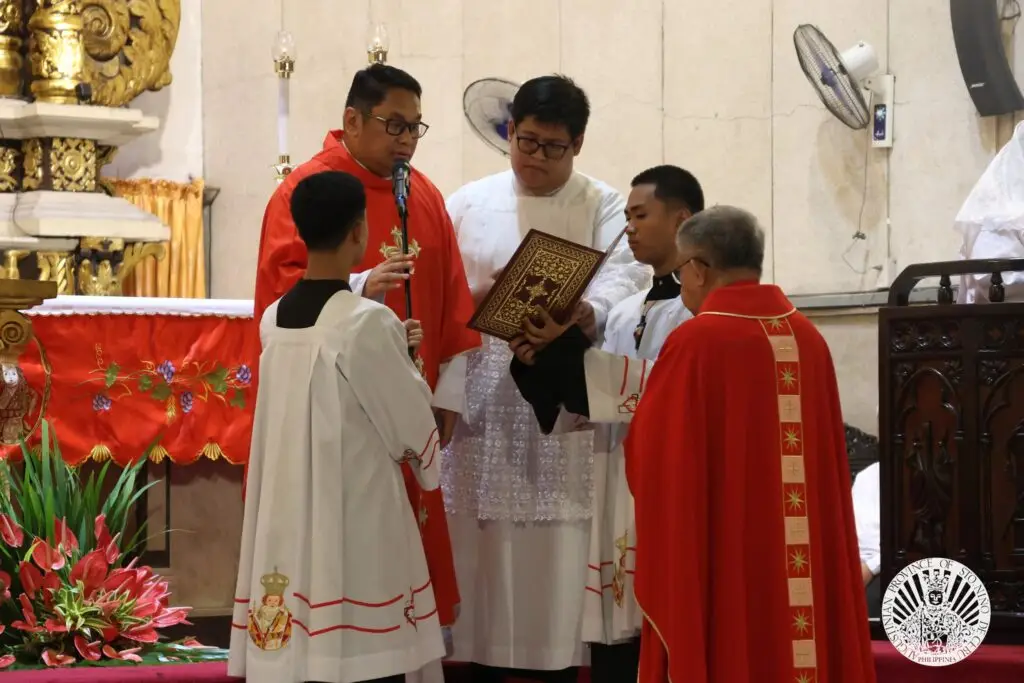
The event formally opened with a Eucharistic celebration presided over by Rev. Fr. Dante O. Juloc, OSA, Chairperson of the Commission on Educational Apostolate. In his welcoming remarks, he emphasized that the mission of educators goes beyond academic instruction, reminding participants that forming the youth is a beautiful service offered to God and society. He also highlighted that AFAA is envisioned as a continuing formation program that prepares friar-administrators for leadership roles in educational institutions.
One of the major highlights of the first day was the keynote address delivered by Dr. Jayeel S. Cornelio, who discussed the current realities and challenges faced by Philippine education. He encouraged Augustinian institutions to rediscover their strengths and continue sharing their gifts in response to the growing needs of the education sector. Despite the many issues confronting schools today, he emphasized that hope remains possible through collaboration, innovation, and faith-driven leadership.
The discussions on the first day also focused on legal concerns affecting Catholic educational institutions. Atty. Sabino Jose M. Padilla III presented important policies and laws related to educational administration, including the Mental Health Act, Safe Spaces Act, labor laws, and employee welfare. He stressed the importance of having updated and well-implemented institutional policies to ensure accountability, legal compliance, and protection for all stakeholders within educational communities.
As the academy continued into its second day, the participants reflected more deeply on the qualities and responsibilities of an Augustinian leader. Rev. Fr. Czar Emmanuel V. Alvarez, OSA, discussed Augustine’s concept of leadership, emphasizing that leadership must be rooted in love, truth, peace, and service for the common good. According to him, an Augustinian leader should guide others with ethical wisdom, spirituality, and fatherly concern while becoming a model worthy of imitation.
Another important discussion was delivered by Dr. Carlo Magno through his presentation on assessment practices in educational institutions. He explained that assessment results only become meaningful when school leaders use them to guide action and improve learning outcomes. By utilizing honest and relevant data, educators can better understand the needs of learners, improve instruction, and strengthen support systems that promote student success.
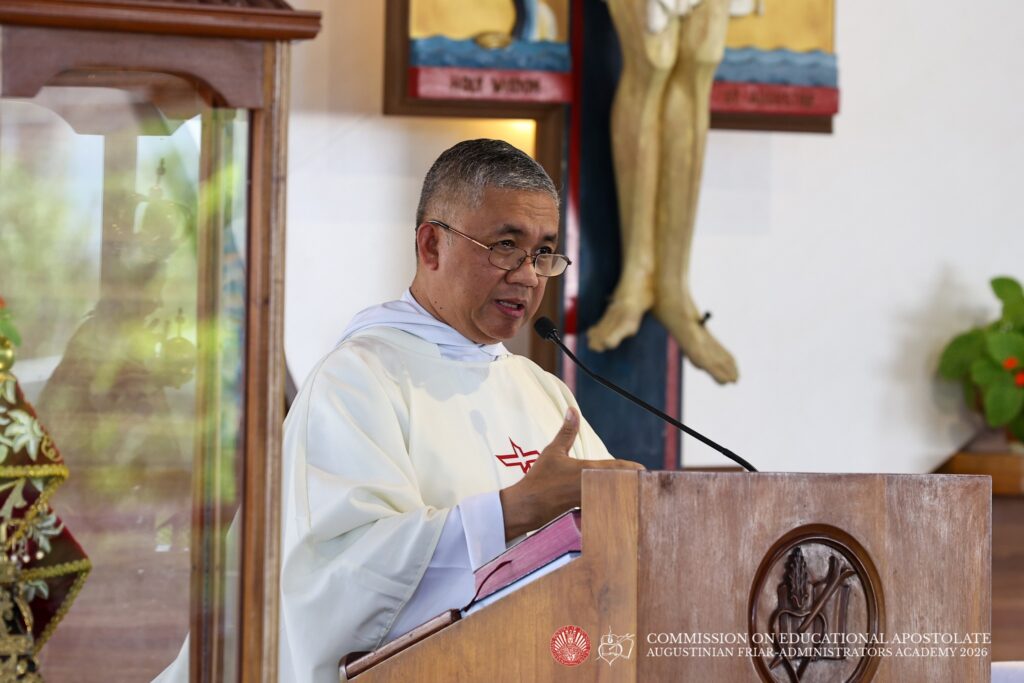
Very Rev. Fr. Andrew P. Batayola, OSA, also shared reflections on Catholic education as a continuing pilgrimage of hope inspired by the life and conversion of St. Augustine. He reminded participants that conversion is not a single moment but a lifelong journey toward God. Because of this, educators are challenged to courageously open new paths where the next generation may encounter Christ in meaningful and relevant ways.
The final presentation for the second day was given by Dr. Allan B. De Guzman, who discussed the competencies needed by today’s school leaders and educators. Through research, theories, and engaging examples, he highlighted the importance of adapting to the rapidly changing world and responding to the needs of modern learners. He emphasized that educational institutions must continuously recalibrate their programs and strategies to ensure the welfare and growth of students.
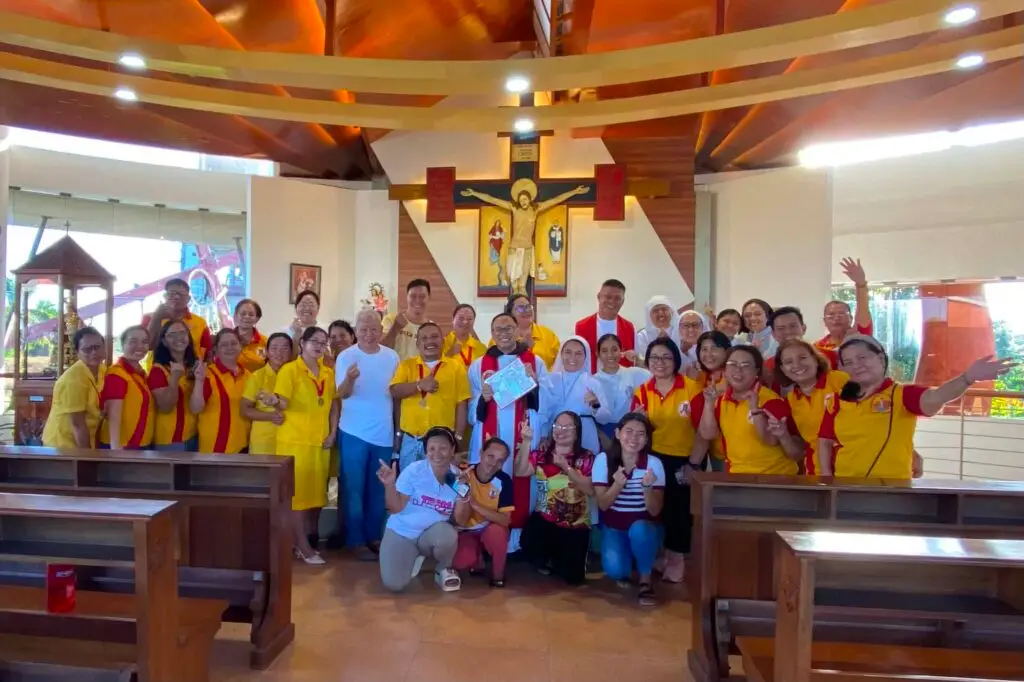
Beyond the formal discussions, AFAA 2026 also became an avenue for fellowship and unity among participants. Light moments during photo sessions, meals, and socialization activities reflected the Augustinian value of “Unitas” or unity. These moments strengthened the sense of community among delegates who shared the same mission of serving the Church and society through education.
On the third and final day, Dr. Rose Marie Salazar-Clemeña delivered a timely presentation on mental health and well-being in educational institutions. She emphasized the need for schools to become safe and nurturing spaces where learners feel valued, engaged, and supported. According to her, educational leadership plays a significant role in promoting school happiness, emotional wellness, and a strong sense of belonging among students and educators alike.
The academy concluded with a Solemn Eucharistic Mass presided over by Very Rev. Fr. Andrew P. Batayola, OSA. In his homily, he reflected on the Augustinian virtues of “Caritas, Unitas, Veritas,” emphasizing that educational leadership today requires collaboration, compassion, and unity within the community. He reminded participants that hopeful students can only be formed within a united educational environment where educators choose understanding, accompaniment, and human dignity over judgment and division.
Overall, AFAA 2026 became more than just a conference for administrators and educators. It served as a meaningful gathering that renewed the participants’ commitment to the Augustinian mission of education. Through insightful discussions, shared experiences, and spiritual reflection, the academy strengthened the call for educators to become instruments of hope, unity, and transformation in today’s Philippine education system.